I. Introduction
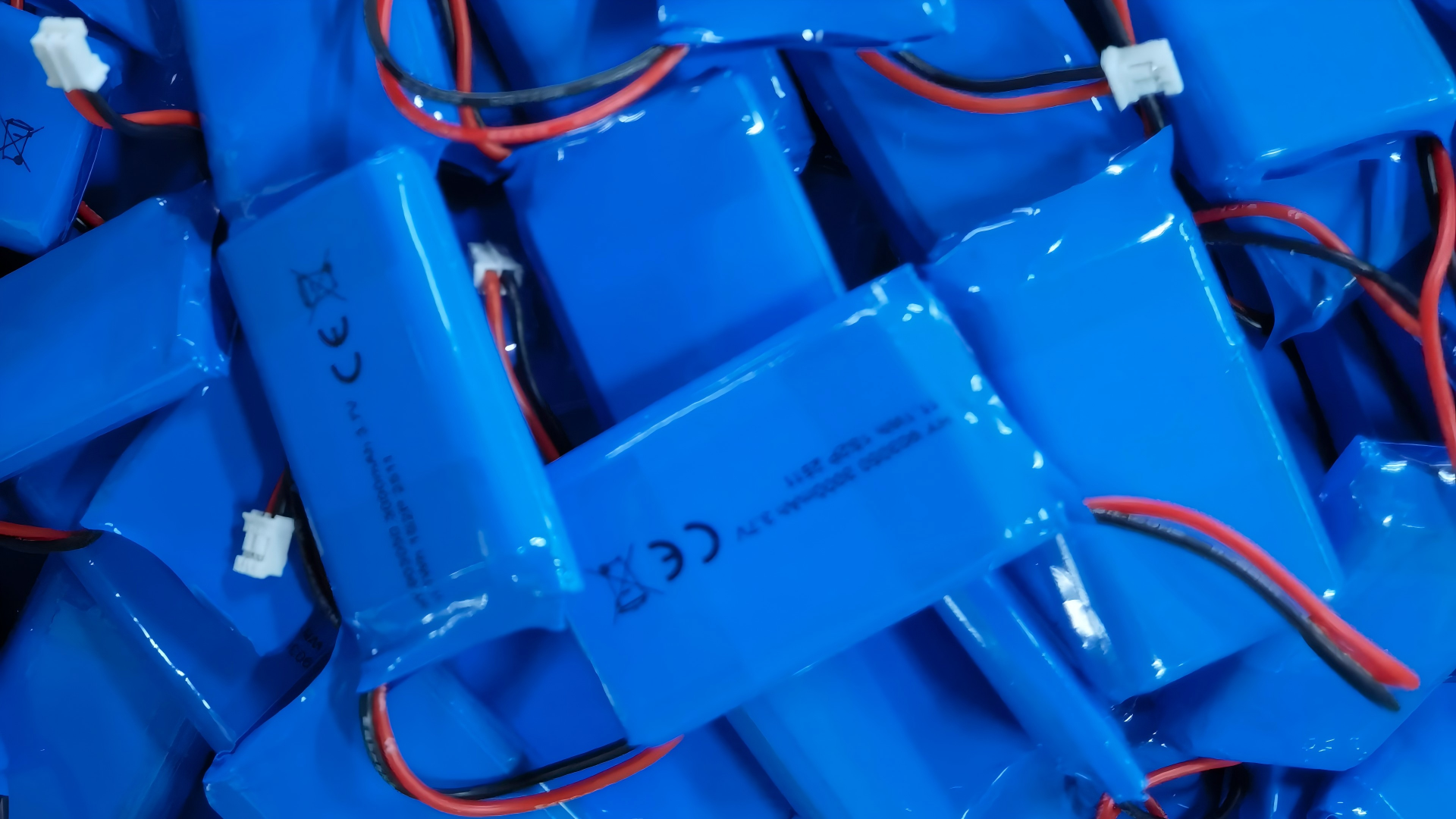
3C batteries — referring to lithium batteries used in Computer, Communication, and Consumer Electronics — are indispensable energy components of the global electronics industry. From smartphones to wearables, from power tools to portable medical devices, the form factors and performance of 3C battery packs are undergoing unprecedented rapid iteration.
In 2025, the global 3C battery market surpassed $62 billion, with annual shipments exceeding 13.5 billion units, a year-on-year growth of 8.3%. As the world’s largest battery producer, China accounts for 67% of global production, with a domestic market size of approximately $21.5 billion. Looking ahead to 2026, driven by the continued boom in AI terminals, wearable devices, and the low-altitude economy, global 3C battery shipments are expected to approach 15 billion units, with growth rebounding above 9%.
This article provides a comprehensive overview of the latest developments in the 3C battery industry from three dimensions: market landscape, five key technology trends, and growth engines.
—
II. Market Landscape: Fundamentals of a $62 Billion Industry
1. Global Market Size and Shipments
In 2025, the global 3C battery market exceeded $62 billion, with shipments surpassing 13.5 billion units. Behind this figure is a structural recovery in the consumer electronics end market — smartphone shipments ended two consecutive years of decline, the AI PC replacement cycle drove countercyclical growth in the notebook/tablet market, and wearable devices maintained high growth momentum.
By region, China accounts for 67% of global 3C battery production, making it not only the largest producer but also one of the fastest-growing markets. China’s domestic market size is approximately $21.5 billion, benefiting from strong demand from domestic consumer electronics brands (Huawei, Xiaomi, OPPO, vivo, etc.) and the synergistic effects of the new energy industry chain.
2. Market Structure Evolution
Traditionally, smartphone batteries have accounted for about half of 3C battery demand (approximately 52%), but this structure is changing. The share of emerging applications such as wearable devices, power tools, portable energy storage, drones, and portable medical devices continues to rise. By 2029, emerging applications are expected to increase their share from the current 15% to over 30%.
—
III. Five Key Technology Trends: From Lab to Mass Production
1. Silicon-Carbon Anode Commercialization — An Energy Density “Shortcut”
The theoretical capacity of traditional graphite anodes is only 372mAh/g, while silicon-carbon anodes boast a theoretical capacity of up to 4,200mAh/g — more than 10 times that of graphite. For a long time, silicon-carbon anodes faced engineering challenges such as high expansion rates (>300%) and short cycle life, but breakthroughs in CVD (Chemical Vapor Deposition) silicon-carbon anode technology have changed this picture.
In 2025, the expansion rate of CVD silicon-carbon anodes has been reduced below 8%, cycle life exceeds 1,000 cycles, and energy density reaches 879Wh/L. Flagship models from vivo, Lenovo, and other brands have already adopted silicon-carbon anode batteries, marking the official commercialization of this technology. By 2026, the penetration rate of silicon-carbon anodes in high-end 3C batteries is expected to increase from 5% to over 15%.
2. Fast Charging Evolution — From “One-Hour Charging” to “Ten-Minute Charging”
Fast charging technology is undergoing a leap from 3C (3x rate charging) to 5C-6C. In 2025, shipments of 3C devices supporting ultra-fast charging (4C and above) exceeded 800 million units, and 100W+ fast charging has become standard in mid-to-high-end smartphones.
By the end of 2026, the penetration rate of 100W+ fast charging in 3C devices is expected to exceed 35%. Key technologies enabling this evolution include: novel electrolyte systems (reducing internal resistance and improving ion conduction efficiency), composite conductive agents (enhancing electrode conductivity), anode fast-charging optimization designs, and advanced thermal management solutions (liquid cooling, phase-change cooling, graphene heat dissipation, etc.).
3. On the Eve of Solid-State Batteries — The “Endgame” of Next-Generation Batteries
Solid-state batteries are regarded as the “ultimate form” of next-generation lithium batteries. In 2025, semi-solid-state batteries achieved mass production and vehicle installation (primarily for new energy vehicles), with energy density reaching 350-400Wh/kg. The commercialization timeline for all-solid-state batteries is accelerating — they are expected to be commercialized first in high-end foldable phones, AR/VR glasses, and other 3C devices with stringent safety and energy density requirements during 2026-2027.
The core advantage of solid-state batteries lies in replacing liquid electrolytes with solid electrolytes, fundamentally solving the safety issues caused by lithium dendrite penetration of separators while significantly increasing energy density (theoretically up to 500Wh/kg and above).
4. Energy Density Race — Marching Toward 800Wh/L
In 2025, the average energy density of 3C lithium cells reached 725Wh/L, and the industry is accelerating toward the 800Wh/L target. The path to higher energy density includes: high-nickel cathode materials (NCM811/NCA), silicon-carbon anode doping, novel electrolyte formulations, electrode structure optimization, and packaging process innovations (such as stacking processes replacing winding processes).
5. Green Compliance — Carbon Footprint & Digital Passport
The EU’s new Battery Regulation (Batteries and Waste Batteries Regulation, EU 2023/1542) introduces entirely new requirements for 3C batteries, including carbon footprint disclosure, digital battery passports, and minimum recycled material content. Starting from 2027, batteries entering the EU market must provide carbon footprint declarations; effective August 18, 2031, the minimum recycled content for cobalt, lead, lithium, and nickel will reach 16%, 85%, 6%, and 6% respectively; by 2036, these thresholds will further increase to 26%, 85%, 12%, and 15%. This regulation is forcing global 3C battery manufacturers to accelerate their green transformation. (Sources: EU Battery Regulation EU 2023/1542; IEA Policy Database; European Parliament)
—
IV. Growth Engines: Three Emerging Tracks Driving Future Growth
1. AI PC Replacement Cycle
The deployment of AI large language models on the edge is driving a replacement cycle in the PC market. In 2025, AI PC shipments grew countercyclically by 11%, and the growth rate is expected to further accelerate in 2026. AI PCs have specific battery requirements: higher capacity (AI inference increases power consumption), thinner packaging (lightweight design trends), and smarter BMS management (dynamic power scheduling).
2. Wearable Device Boom
From 2025 to 2029, the global wearable device market CAGR is expected to reach 24.3%. Smart watches, TWS earbuds, AR/VR glasses, and health monitoring devices are the primary growth drivers. Wearable devices have extremely demanding battery requirements — ultra-miniaturization (<1cc), special-shaped packaging, ultra-low power consumption, and high safety — driving strong demand for polymer pouch lithium batteries and micro coin cells.
3. Automotive Electronics & Emerging Applications
From 2025 to 2029, the CAGR for 3C battery demand in automotive electronics is as high as 42.8%, primarily driven by applications such as smart cockpits, in-car entertainment systems, and smart keys. Additionally, the share of 3C battery demand from emerging applications such as drones/eVTOL (low-altitude economy), robotics, and portable medical devices will increase from 15% to 30%.
—
V. Conclusion
2025-2026 marks a critical turning point for the 3C battery industry. The commercialization of silicon-carbon anodes, the popularization of fast charging technology, and the eve of solid-state battery commercialization, combined with strong demand from AI terminals, wearable devices, and the low-altitude economy, together constitute the industry’s “dual engines” — technological innovation driving supply-side upgrades, and emerging applications driving demand-side expansion.
For 3C battery pack customization companies, staying abreast of technology trends, proactively investing in new materials and processes, and building comprehensive engineering capabilities from cell selection to BMS development will be key to winning future competition.
[Image Notes: This article recommends 3-4 images — Global 3C Battery Market Size Growth Trend Bar Chart (2020-2029), Silicon-Carbon Anode vs. Traditional Graphite Anode Performance Comparison Chart, Five Technology Trends Infographic]
—
Data Sources:
1. GEP Research, “Global and China 3C Battery Market Strategic Panoramic Analysis Report” (2026) — Market size $62B, shipments 13.5B units, China 67% production share, smartphone batteries 52% of demand, average cell energy density 725Wh/L, AI PC shipment growth 11%
2. Hua Xin Securities Research / “Energy Storage Science and Technology” journal — Silicon-carbon anode theoretical capacity 4200mAh/g, graphite anode theoretical capacity 372mAh/g
3. TY Data / Xin Cang Information — CVD silicon-carbon anode expansion rate below 8%, cycle life over 1,000 cycles, vivo/Lenovo flagship models with silicon-carbon anode batteries at 879Wh/L energy density
4. Eastmoney, “Global and China Consumer Battery Market Size and Development Trends 2026” — Wearable device battery CAGR 24.3%, power tool battery CAGR 10.9%, automotive electronics battery CAGR 42.8%
5. EU Battery Regulation EU 2023/1542 / IEA Policy Database / European Parliament — Carbon footprint disclosure requirements, minimum recycled content (2031: cobalt 16%/lead 85%/lithium 6%/nickel 6%; 2036: cobalt 26%/lead 85%/lithium 12%/nickel 15%)
6. Canalys — AI PC shipment forecasts