I. Introduction
3C battery packs are not a “one-size-fits-all” product. The battery pack required by a smartphone may differ fundamentally from that needed by a portable ultrasound device — in cell type, packaging form, voltage and capacity, safety certification, and even operating temperature range. Understanding the differentiated needs of different application scenarios is the prerequisite for proper product selection and customization.
This article provides an in-depth analysis of seven major application scenarios: smartphones, smart wearables, laptops/tablets, power tools, drones/eVTOL, power banks/portable energy storage, and portable medical devices — examining each from three dimensions: market demand, technical characteristics, and battery requirements.
—
II. Smartphone Batteries: The “Battleground” of High Energy Density and Fast Charging
Smartphones represent the largest single application market for 3C batteries, accounting for approximately 52% of total demand. Although global smartphone shipment growth has slowed, the proliferation of 5G and the introduction of AI features (such as on-device LLM inference) continue to drive increases in per-unit battery capacity — flagship models have generally increased from 4,000mAh to 5,000-6,000mAh.
Key Requirements:
– High energy density: Pack more energy into limited body space, requiring cell energy density ≥750Wh/L
– Ultra-thin packaging: Flagship models are typically under 8mm thick, with battery thickness needing to be ≤4mm
– Fast charging support: 100W+ fast charging has become standard in mid-to-high-end models, placing high demands on cell fast-charging performance and BMS thermal management
– Special-shaped packaging: L-shaped, trapezoidal, and other non-standard battery pack designs are increasingly common to maximize internal space utilization
—
III. Smart Wearable Device Batteries: The Ultimate Challenge of Ultra-Miniaturization and Special-Shaped Packaging
Smart wearable devices are the fastest-growing 3C battery application scenario, with an expected CAGR of 24.3% from 2025 to 2029. Smart watches, TWS earbuds, AR/VR glasses, and health monitoring bands contribute the primary growth.
Key Requirements:
– Ultra-miniaturization: TWS earbud battery capacity is only 40-80mAh, with volume often less than 0.5cc
– Special-shaped packaging: Limited space beneath smart watch bands requires curved, ultra-thin, and other non-standard designs
– Low power consumption: Standby current must be controlled at the microamp level, placing extreme demands on BMS low-power design
– High safety: Wearable devices are in prolonged skin contact with the human body, requiring stringent battery safety standards
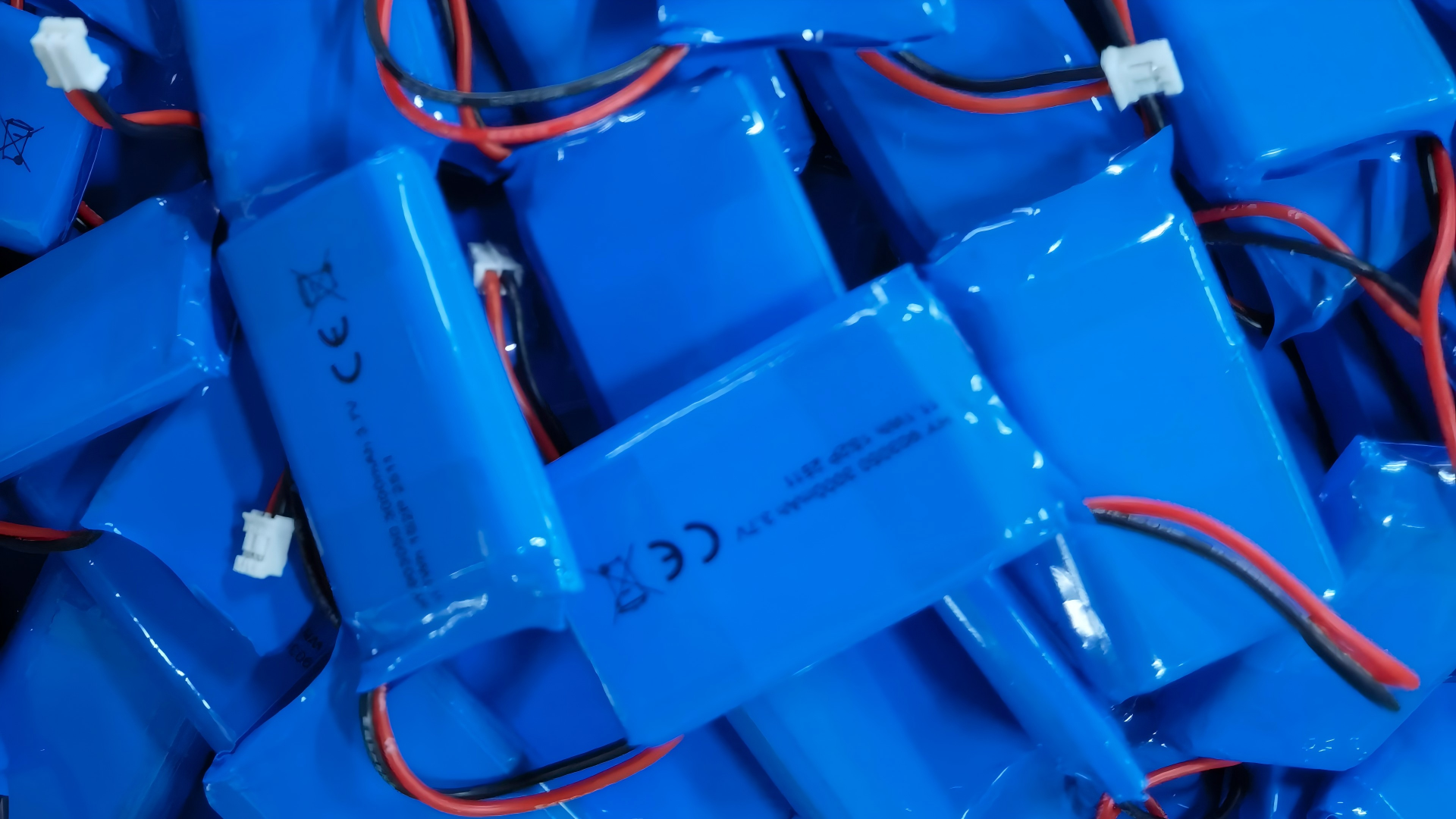
Polymer pouch lithium batteries dominate the wearable device market due to their customizable shapes, ultra-thin packaging, and high energy density advantages.
—
IV. Laptop/Tablet Batteries: High-Capacity Demand Driven by AI
The AI PC wave is reshaping the battery demand landscape for laptops and tablets. In 2025, AI PC shipments grew countercyclically by 11%, with a CAGR of 5.7% from 2025 to 2029. The addition of AI inference tasks increases system power consumption, raising the bar for battery capacity and charge/discharge management.
Key Requirements:
– High capacity: Mainstream laptop battery capacity is 60-99Wh; AI PCs may require 100Wh+
– Stable output: Laptops require stable power delivery under high-load operation, demanding strong BMS power management capabilities
– Thinning: The trend toward ultra-thin laptops requires continuously reducing battery thickness while maintaining high capacity
– Long cycle life: Business users expect battery capacity degradation of no more than 20% over 3-5 years, requiring cycle life ≥800 cycles
—
V. Power Tool Batteries: Hardcore Requirements for High-Rate Discharge and Impact Resistance
Power tools are one of the biggest beneficiaries of the cordless replacement trend. With the rise of DIY culture and the popularization of professional-grade cordless tools, the power tool battery market CAGR is 10.9% from 2025 to 2029.
Key Requirements:
– High-rate discharge: Drills, grinders, and other tools can draw instantaneous currents of 20-30A, requiring cells that support 10C+ continuous discharge
– Impact and vibration resistance: Outdoor and construction site environments are harsh, requiring battery packs with impact-resistant and vibration-resistant designs
– Wide temperature range: Reliable operation across the full -20°C to 60°C range
– Long cycle life: Professional users charge and discharge frequently daily, requiring cycle life ≥1,000 cycles
Ternary lithium (NCM) cells are the preferred cell type for power tool batteries due to their high power density and excellent rate performance.
—
VI. Drone/eVTOL Batteries: The “Ceiling” of Ultra-High Energy Density
The low-altitude economy has been designated as a strategic emerging industry in China. Drones and eVTOL (electric vertical takeoff and landing) aircraft have the most demanding energy density requirements in the 3C battery field.
Key Requirements:
– Ultra-high energy density: Consumer drones require ≥250Wh/kg; industrial-grade/eVTOL require ≥400-500Wh/kg
– High-rate discharge: Drones require far more power during takeoff and hover than during cruising, requiring cells that support 5-15C discharge
– Fast charging capability: Aerial photography/inspection scenarios require quick recharging, reaching 80%+ within 30 minutes
– High reliability: Battery failure during flight can cause crashes, requiring extremely high BMS protection and redundancy design
—
VII. Power Bank/Portable Energy Storage Batteries: Balancing Large Capacity with Safety and Durability
The power bank and portable energy storage market maintains steady growth. According to industry reports, the global USB power bank market reached approximately $12.5 billion in 2025, with a CAGR of approximately 6.5% from 2025 to 2032 (Source: PW Consulting Research); for the Chinese market, the power bank consumer battery CAGR is approximately 9.4% from 2025 to 2029 (Source: Eastmoney). Consumer demand for large capacity (10,000-30,000mAh), fast charging (PD/QC protocols), and high safety continues to rise.
Key Requirements:
– Large capacity: Mainstream power banks are 10,000-20,000mAh; portable power stations can reach 500Wh+
– Multi-protocol fast charging: Must be compatible with PD3.0, QC4+, SCP, and other fast charging protocols
– Durability: Requires cycle life ≥500 cycles with capacity retention ≥80%
– Safety: High-capacity battery packs carry greater safety risks, demanding strict BMS protection and flame-retardant enclosures
Lithium iron phosphate (LFP) cells are widely used in portable power stations due to their long cycle life and excellent thermal stability.
—
VIII. Portable Medical Device Batteries: Ultra-High Reliability and Dual Certification
Portable medical devices represent one of the most demanding application scenarios for 3C batteries. In 2025, the global medical equipment battery market was approximately $1.65 billion, expected to reach $2.44 billion by 2032, with a CAGR of approximately 5.8% from 2026 to 2032 (Source: QYResearch). Another report indicates that the global medical device lithium-ion battery market reached approximately $1.79 billion in 2025, with a CAGR of approximately 6.5% from 2026 to 2032 (Source: QYResearch). As the trend toward portable and intelligent medical devices accelerates, medical-grade battery demand continues to grow.
Core Application Scenarios:
– Portable patient monitors: Require 24/7 uninterrupted power supply, with extremely high demands on battery endurance and reliability
– Infusion pumps: Precise flow rate control requires stable voltage output with minimal ripple
– Portable ultrasound: High power consumption requires high-capacity battery packs for extended outdoor use
– Wearable health monitoring: CGM (continuous glucose monitoring), dynamic ECG patches, etc., require ultra-miniaturization and ultra-low power consumption
– Hearing aids: Zinc-air batteries are being replaced by rechargeable lithium batteries, requiring ultra-miniaturization and long cycle life
Key Requirements:
– Ultra-high reliability: Medical device battery failures can be life-threatening, requiring far higher reliability than ordinary consumer electronics
– Long cycle life: 500-1,200 cycles, with predictable and monitorable capacity degradation
– Low self-discharge: Must maintain charge during standby for extended periods, with monthly self-discharge rate ≤2%
– Stable voltage output: Medical devices require high voltage precision, and BMS must provide precise voltage management capabilities
Special Certification Requirements:
Portable medical device batteries must simultaneously meet IEC 60601-1 (medical electrical equipment safety standard) and IEC 62133 (portable sealed lithium battery safety standard) dual certification. Additionally, entering specific markets requires compliance with FDA (United States), CE MDR (EU), and other medical device regulations.
Technology Trends:
The adoption rate of pouch lithium batteries in wearable and handheld medical electronics has exceeded 64%, with energy density of 180-260Wh/kg — 22% lighter than cylindrical cells of equivalent capacity. The trend toward portable and intelligent medical devices is driving rapid growth in customized battery pack demand, with the medical device battery customization market CAGR expected to exceed 8% from 2025 to 2029.
—
IX. Conclusion
From the ultra-thin fast-charging needs of smartphones to the ultra-high reliability of medical devices, from the high energy density of drones to the high-rate discharge of power tools — the diversity of 3C battery pack application scenarios dictates that “customization” is not an option but a necessity.
Different scenarios have vastly different requirements for cell type, packaging form, BMS functionality, certification requirements, and environmental adaptability. Deeply understanding the differentiated needs of each scenario is the foundation for battery pack customization companies to provide precise solutions for their customers, and the guarantee of product safety and performance.
[Image Notes: This article recommends 3-4 images — Seven Application Scenarios Icon Grid, Battery Specification Comparison Table by Scenario (including medical device specifications), Battery Pack Photos/Illustrations for Different Scenarios]
—
Data Sources:
1. GEP Research, “Global and China 3C Battery Market Strategic Panoramic Analysis Report” (2026) — Smartphone batteries account for 52% of total demand
2. Eastmoney, “Global and China Consumer Battery Market Size and Development Trends 2026” — Wearable device battery CAGR 24.3%, power tool battery CAGR 10.9%, laptop/tablet battery CAGR 5.7%, power bank consumer battery CAGR 9.4%
3. QYResearch, “2026-2032 Global and China Lithium-ion Battery for Medical Device Market Status and Forecast” — Medical device lithium-ion battery market approximately $1.79B in 2025, CAGR 6.5%
4. QYResearch, “2026-2032 Global and China Medical Equipment Batteries Market Status and Forecast” — Medical equipment battery market approximately $1.65B in 2025, CAGR 5.8%
5. PW Consulting Research — Global USB power bank market approximately $12.5B in 2025, CAGR 6.5%
6. Industry estimates — Pouch lithium battery adoption rate in wearable medical electronics, energy density, and weight comparison data based on comprehensive industry analysis